Signs Your Hamilton Lawn Needs Overseeding
 A thick, green lawn can make a property look healthier and more inviting, but even well-maintained grass can become thin, patchy, or weak over time. Heavy foot traffic, seasonal weather, drought, pests, disease, poor soil conditions, and natural grass aging can all contribute to declining lawn density.
If your Hamilton lawn no longer looks as full as it once did, overseeding may be an effective way to introduce new grass plants into existing turf. Unlike completely replacing a lawn, overseeding involves spreading grass seed over an established lawn to help fill thin areas and improve overall density.
Recognizing the signs that your lawn needs overseeding can help you address problems before they become more extensive. This guide explains the most common warning signs, when to overseed, how to prepare your lawn, and when professional lawn seeding services in Hamilton may be worth considering.
What Is Lawn Overseeding?
Lawn overseeding is the process of spreading new grass seed over an existing lawn without completely removing the established turf.
The purpose is to increase grass density, fill thin areas, improve the appearance of the lawn, and introduce new grass plants into areas where existing turf has declined.
Overseeding can be particularly useful when the existing lawn is still generally healthy but has developed thinner sections or scattered bare spots.
It is different from starting a lawn from scratch. With overseeding, the existing grass remains in place while new seed is introduced to improve coverage.
Why Does a Hamilton Lawn Become Thin?
Several factors can contribute to thinning grass in Hamilton.
Seasonal Weather
Ontario lawns experience changing conditions throughout the year. Winter temperatures, spring moisture, summer heat, and periods of drought can all place stress on grass.
Heavy Foot Traffic
Frequently used lawns can become compacted and worn, particularly around walkways, play areas, entrances, and outdoor gathering spaces.
Soil Compaction
Compacted soil can restrict the movement of water, air, and nutrients through the soil. This can make it more difficult for grass roots to establish and remain healthy.
Poor Lawn Maintenance
Inconsistent mowing, watering, fertilization, and other maintenance practices can contribute to declining lawn density.
Weeds
When turf becomes thin, weeds can take advantage of open spaces and compete with grass for water, nutrients, and sunlight.
Pests and Lawn Diseases
Certain lawn pests and diseases can damage grass and leave behind weakened or bare areas that may require repair.
Signs Your Hamilton Lawn Needs Overseeding
Not every lawn problem requires overseeding. However, several visible signs can indicate that introducing new grass seed may be beneficial.
1. Your Lawn Has Thin or Sparse Grass
One of the clearest signs is a lawn that looks noticeably thinner than it used to.
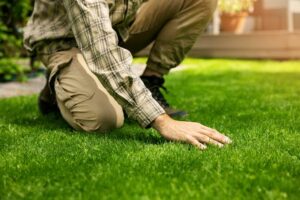
You may be able to see soil through the grass in certain areas, particularly when looking across the lawn from a low angle.
Thin turf means fewer grass plants are occupying the available space. Overseeding can help increase grass density when the underlying lawn is still suitable for renovation.
2. You Can See Bare Soil Between Grass Blades
Healthy turf should generally provide good coverage across the lawn.
If you can easily see patches of soil between individual grass plants, your lawn may be losing density.
Small areas of exposed soil can also become opportunities for weeds to establish. Overseeding can help fill these spaces with new grass plants when conditions are appropriate.
3. Your Lawn Has Persistent Bare Spots
Small bare patches can develop for many reasons, including foot traffic, pet activity, environmental stress, pests, and disease.
If the same areas remain bare after normal lawn maintenance, simply watering the lawn may not be enough.
Overseeding or targeted spot seeding can help restore grass coverage, provided the underlying cause of the damage has been addressed.
4. Grass Looks Weak or Uneven
A lawn doesn’t necessarily need to have completely bare areas to benefit from overseeding.
If some sections look weak, sparse, or significantly less dense than others, introducing new seed may help improve consistency.
Uneven growth can also indicate differences in soil conditions, sunlight, moisture, or lawn usage. These factors should be considered before overseeding.
5. Your Lawn Has Been Damaged by Summer Stress
Hot and dry periods can place considerable stress on turfgrass.
Hamilton lawns may experience periods where grass becomes dormant, discolored, or weakened. Some lawns recover naturally when temperatures moderate and moisture becomes available, while others may be left with thin or damaged areas.
If your lawn remains thin after recovering from summer stress, overseeding may help rebuild turf density.
6. Your Lawn Has Experienced Heavy Foot Traffic
Lawns used frequently for recreation, outdoor gatherings, pets, or general activity can experience considerable wear.
Repeated traffic can damage grass blades and contribute to soil compaction.
If certain pathways or activity areas have become noticeably thinner than the rest of the lawn, overseeding may help restore coverage once the soil and underlying conditions have been addressed.
7. Weeds Are Taking Over Thin Areas
When grass becomes sparse, weeds often have more opportunities to establish.
A lawn with increasing weed presence may therefore be showing an underlying turf-density problem.
Overseeding can help increase competition from desirable grass, but it should not be viewed as a substitute for proper weed management. Existing weed problems and the timing of weed-control treatments should be considered when planning an overseeding project.
8. Your Lawn Is Recovering Poorly After Winter
Ontario winters can be challenging for residential lawns.
After snow and cold weather, homeowners may notice thin patches, damaged grass, or areas where turf has struggled to recover.
Some lawns naturally improve as temperatures rise, while others remain sparse. If your lawn continues to have weak coverage after its normal spring recovery period, overseeding may be worth considering.
Best Time to Overseed a Lawn in Hamilton
Timing is an important factor in successful lawn overseeding.
For cool-season grasses commonly used in Ontario, late summer to early fall is generally an excellent period for overseeding because soil conditions can be favorable for seed germination and young grass establishment.
Early fall can offer several advantages:
- Cooler temperatures than midsummer
- More favorable moisture conditions
- Adequate time for young grass to establish before winter
- Reduced heat stress compared with peak summer
- Less competition from some summer weeds
Spring can also be suitable in certain circumstances, but timing should account for soil temperatures, moisture, weather conditions, and potential competition from weeds.
Rather than choosing a date based only on the calendar, consider the actual condition of your lawn and current weather patterns.
How to Prepare Your Lawn for Overseeding
Good preparation can make a significant difference in the success of overseeding.
Mow Properly
Mowing the lawn appropriately before overseeding can help new seed reach the soil more effectively.
Avoid scalping the lawn unless specifically recommended as part of a professional lawn renovation plan.
Remove Excess Thatch
A heavy layer of thatch can interfere with seed-to-soil contact. If thatch has accumulated excessively, dethatching may be necessary.
Consider Aeration
Soil compaction can make it harder for grass roots and new seedlings to establish. Lawn aeration can help create pathways for air, water, and nutrients to move through compacted soil.
For lawns experiencing both compaction and thinning, aeration and overseeding can work well as complementary lawn-care practices.
Address Underlying Problems
Before overseeding, determine why the lawn became thin.
For example, if the problem is caused by excessive shade, drainage issues, pests, disease, or ongoing heavy traffic, simply adding seed may not solve the underlying problem.
Provide Appropriate Moisture
New grass seed requires suitable moisture conditions for germination and establishment. Avoid allowing newly seeded areas to repeatedly dry out.
At the same time, excessive watering can create its own problems, so irrigation should be adjusted according to weather and soil conditions.
Overseeding vs. New Lawn Installation
Overseeding is not appropriate for every lawn.
Overseeding May Be Suitable When:
- Most of the existing lawn is still healthy
- Grass is primarily thin rather than completely absent
- Bare areas are relatively limited
- The soil is generally suitable for growing grass
- You want to improve lawn density without replacing the entire lawn
New Lawn Installation May Be More Appropriate When:
- Most of the lawn is completely bare
- Existing turf is severely damaged
- Soil conditions are unsuitable for grass growth
- Major drainage or grading problems exist
- The lawn has extensive pest or disease damage
- Existing turf coverage is too poor for successful renovation
A lawn assessment can help determine which approach makes the most sense for your property.
Benefits of Professional Lawn Seeding Services in Hamilton
DIY overseeding is possible, but getting consistent results can be challenging.
Professional lawn seeding services in Hamilton can take several factors into consideration, including lawn condition, soil, grass density, moisture, sun exposure, and the causes of turf decline.
Professional lawn care can help with:
- Assessing lawn condition
- Identifying potential causes of thinning
- Preparing the lawn for seeding
- Selecting appropriate grass seed
- Improving seed-to-soil contact
- Coordinating aeration and overseeding when appropriate
- Developing an ongoing lawn-care plan
The most important point is that overseeding should be part of a broader lawn-care strategy rather than treated as a quick fix for every grass problem.
Frequently Asked Questions
How do I know if my lawn needs overseeding?
Thin grass, visible soil, persistent bare spots, weak growth, and uneven turf coverage are common signs that your lawn may benefit from overseeding.
What is the best time for lawn overseeding in Hamilton?
Late summer and early fall are generally favorable periods for overseeding cool-season lawns in Ontario. However, the ideal timing can vary depending on weather and lawn conditions.
Can overseeding fix bare patches?
Overseeding or spot seeding can help repair smaller bare areas. However, the cause of the bare patch should be addressed first, especially if pests, disease, drainage, or soil problems are involved.
Should I aerate before overseeding?
Aeration can be beneficial when soil compaction is limiting grass growth. It can improve pathways for air, water, and nutrients and may help create better conditions for new seed.
Can I overseed a lawn with weeds?
It depends on the type and extent of the weed problem and the treatment being used. Weed management and overseeding should be properly coordinated because some weed-control treatments can interfere with new grass establishment.
How long does it take for overseeded grass to grow?
Germination and establishment time vary depending on grass species, soil temperature, moisture, weather, and seed quality. New grass generally requires consistent care during its establishment period.
Is professional lawn seeding better than DIY?
Professional seeding can be beneficial when a lawn has significant thinning, soil compaction, uneven growth, or other underlying issues. Professionals can evaluate the lawn and coordinate preparation, seeding, and follow-up care.
Give Your Hamilton Lawn a Fresh Start With Professional Overseeding
A thin or patchy lawn doesn’t necessarily mean you need to replace your entire yard. If most of your existing turf is healthy, overseeding can be an effective way to improve lawn density and restore a fuller appearance.
The key is identifying why the lawn has become thin and choosing the right combination of lawn-care practices. Proper preparation, suitable seed, good seed-to-soil contact, and consistent follow-up care can all contribute to better results.
If your Hamilton lawn is looking thin, patchy, or worn, Weed-A-Way can help you determine whether professional lawn seeding or overseeding is right for your property.
Contact Weed-A-Way today to learn more about professional lawn seeding services in Hamilton and take the next step toward a thicker, healthier-looking lawn.